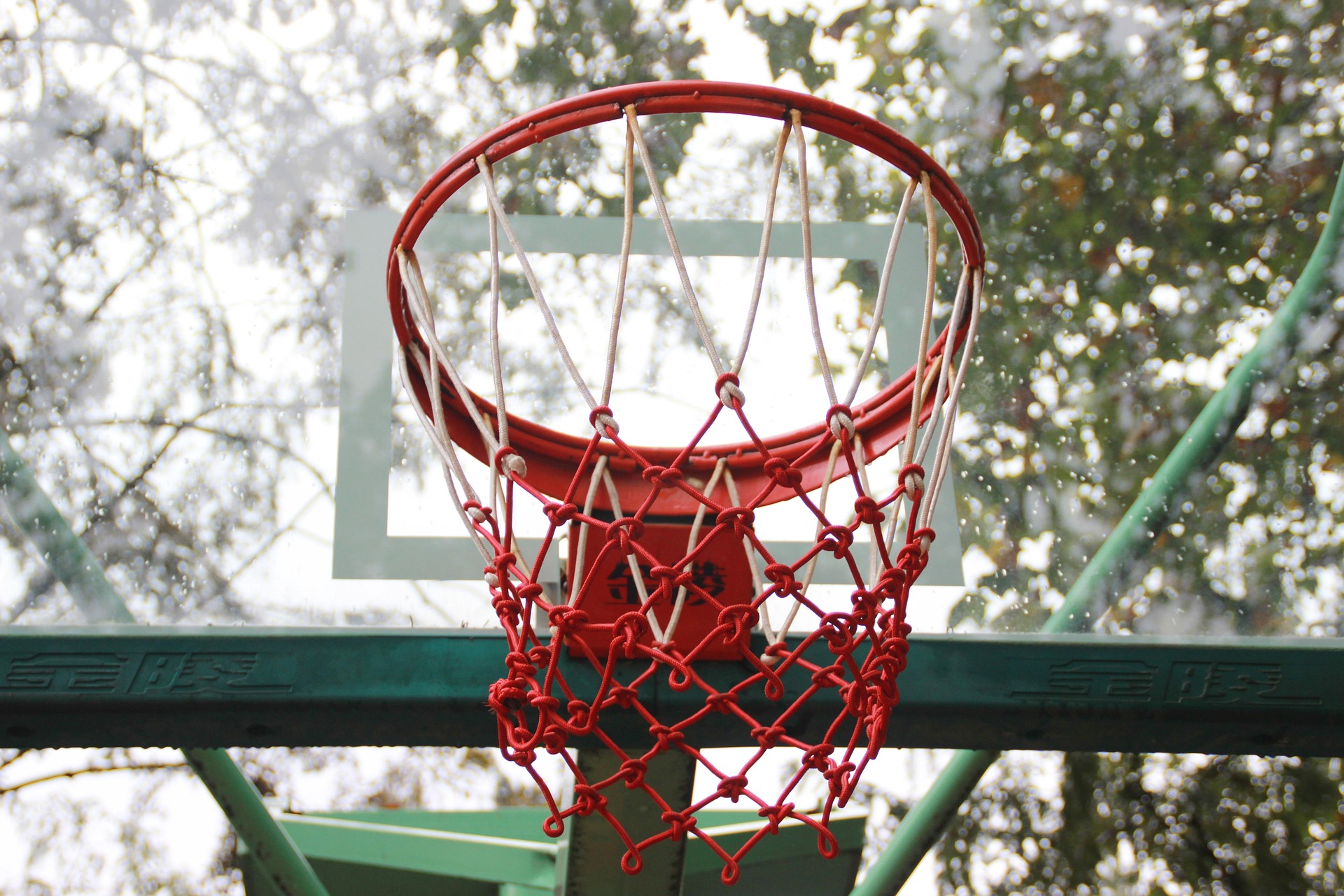
The hoop dreams of the Iran men’s wheelchair basketball team have been stopped short/LinghuiXu via Pixabay
The United States’ war with Iran, which has raged since February, has caused a spike in the prices of crude oil, gasoline and consumer household goods.
Now, the war is impacting international sports.
Sports and geopolitics often collide, but rarely do para sport teams get tied up alongside their non-disabled counterparts. But that’s exactly what is happening at the 2026 World Wheelchair Basketball Championships currently being held in Ottawa, Ontario, Canada.
It’s unclear why — and the ripple effects will likely impact the competition and raise questions about the future of para sport in an era of increasing global conflict. The International Paralympic Committee welcomed Russian athletes back into the fold recently and Israel currently competes in international competition. This withdrawal from Iran will only add to the number of people questioning how Disabled athletes play a role in geopolitics.
On Sept. 5, the International Wheelchair Basketball Federation—the sport’s international governing body known as the IWBF—announced that Iran’s men’s wheelchair basketball team was considering skipping the tournament because several support staff members, including coaches, did not receive visas in time.
At that time, the body said in a statement that the IWBF and the local organizing committee were “working closely with the Iranian Federation and have provided all possible support regarding the outstanding applications, including constant exchange with the relevant Canadian authorities.”
The organization emphasized that it had no direct involvement in the visa process “as the decision remains the sole responsibility of the Immigration, Refugees and Citizenship Canada (IRCC), the responsible Canadian authority, who is following due process and its established procedures on their end.”
When reached for comment, the IRCC shared their policy:
“Due to privacy laws, we cannot speak to individual cases without consent. However, we can say that visa applications are considered on a case-by-case basis based on the information presented by the applicant. It is important to note that all clients who submit an application to Immigration, Refugee and Citizenship Canada (IRCC) are subject to comply with eligibility and admissibility requirements, as part of the process, regardless of their country of origin. All applicants receive thorough correspondence from IRCC regarding the decision on their application.”
According to the agency’s website, the IRCC’s current estimated waiting time for a visitor’s visa from Iran is 119 days—almost four months. Iran only qualified in June at a last-chance qualifying tournament. It is unclear if the conflict in Iran contributed to these visa denials, although all 12 athletes did receive their visas to travel for the competition, according to the IWBF.
A day after the original statement, on Sept. 6, the IWBF released another statement announcing that the Iranian team had made the decision not to attend and that, while the organization understands the team’s “difficult” situation, there are significant implications for the tournament. They also added that any future fallout for the Iranian team will be discussed at a later date
“A withdrawal at this very late stage has significant implications for the organisation and integrity of the World Championship. Consequently, our immediate priority is to focus on delivering the event, address the areas affected and work closely with our partners to mitigate the impact…,” the IWBF statement said.
Iran’s withdrawal means that each of their games in the three-game round robin in the first round were forfeited. This isn’t the first time this year that the IWBF has faced similar issues. During the last-chance qualifier, where Iran punched their ticket to the world championships, Venezuela had to withdraw due to a lack of funds.
The IWBF is saying the quiet part out loud when they say that the Iranian team’s decision will have “longer-term implications.” In a statement to the state media publication Tehran Times, the head of the Iranian federation Jalil Koohpayehzadeh said administrative barriers forced their withdrawal.
“The team’s decision was to compete, but this cannot be done without the technical staff…The competition starts on Wednesday, and there is no longer enough time for the visas to be issued, as the process takes at least several days,” Koohpayehzadeh said.
Both the IWBF and the Iranian team find themselves in a tough spot. International para sport is always on a knife’s edge financially. The powerhouse teams—with comparatively big budgets—have traditionally come from North America and Europe. These are teams where funding models typically rely on results, federal funding, and—in the case of the U.S.—donations. Funding has also increasingly come from large corporate sponsors. All of the money in para sport revolves around the Paralympics and this withdrawal makes their path to LA 2028 significantly harder.
At the same time, international para sport, as previously covered by DJA, is both a key tool for democracy and (at its best) a pathway to better services for Disabled people in underprivileged nations. These nations are often—though not always—in the global south. The IWBF, aside from the chaos that comes from a team dropping out of a tournament a few days before it begins, will have to weigh its international growth ambitions with ensuring the competitive landscape is fair. That’s a tough balance to strike.
The Wheelchair Basketball World Championships for both men and women run September 9-19.
DJA will continue to report on this story.
More DJA Coverage

On August 20, Arizona State University hockey player and St. Louis Blues draftee Matthew Mayich collapsed due to a...
By
September 9, 2026
Ed Markey has been fighting for disability rights for decades At a very brief first glance, the...
By
September 4, 2026
Free bus passes for some Disabled people could make England more accessible/Vane Monte via Pixabay August had...
By
September 2, 2026