
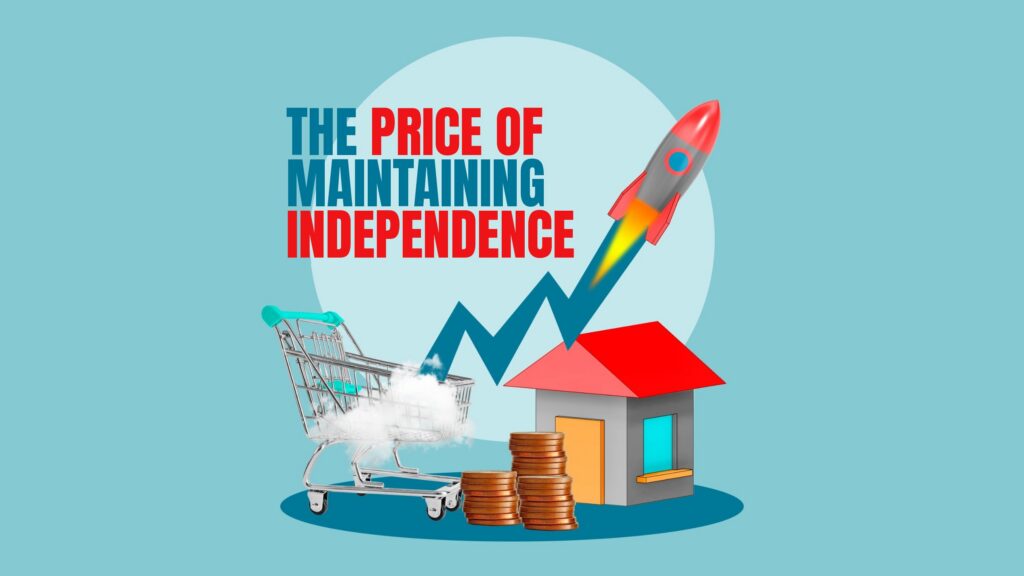
 For Ricole Wicks, 38, an entrepreneur from Greensboro, North Carolina, independence means preserving enough energy to get through the day. “My goal is to have the least amount of assistance possible, to be able to do as much as I can on my own without using up all my energy in the first 10 minutes of the day, or without going without something that affects my quality of life.”
Wicks uses a power wheelchair and receives daily help from a personal aide. On a good day, she can get away with needing just three hours of assistance. Since she no longer receives Medicaid, that amounts to a minimum of $75 a day that she pays out of pocket.
Public programs can help pay for some of these supports. Medicaid’s home- and community-based services waivers allow states to provide services such as personal care, home health aides and help with household tasks to eligible people living in their homes and communities. Wicks has been without Medicaid since May 2025, when the state determined she earned too much to qualify.
Finding and obtaining equipment can demand a different approach. For two years, the bathing setup in Wicks’ apartment wasn’t accessible. She relied on bed baths.
After being crowned Ms. Wheelchair North Carolina 2026, Wicks attended an Abilities Expo in New Jersey, where she met representatives of MorganAH Medical, a Murrieta, California-based medical equipment company whose flagship product is an expandable rolling bathtub for people with limited mobility. A conversation led to a promotional partnership. Wicks would serve as a spokesperson for the tub, and in exchange the company would provide one to her. She estimated its value at about $7,500. The tub solved her bathing problem.
“I’m able to at least have the dignity of a bath now,” she said wryly.
Affordability has remained a major national concern through the past two election cycles. Americans continue to wrestle with the cost of housing, food, health care and other necessities, and those worries are carrying into the 2026 midterms. About 84% of registered voters surveyed by the Pew Research Center this fall said the economy was very important to their vote, making it the top issue among both Republican- and Democratic-leaning voters. Earlier polling also singled out the cost of living and affordability as especially prominent concerns, suggesting household expenses will weigh heavily on voters this election.
The cost of living has continued to rise. Consumer prices increased 3.7% over the 12 months ending in September, affecting how Americans live, work and eat. But for Disabled people, higher prices collide with expenses and needs that aren’t optional. Many are stretching tight budgets, relying on friends and neighbors and finding new ways to meet their most basic needs.
For those who lead lives of independence, these costs also threaten their ability to maintain that independence and their hard-fought sense of freedom.
Laura White, 40, is a licensed mental health therapist from Michigan. Because she has been blind since birth, preserving her freedom carries particular weight. “It’s everything I’ve worked for,” White said. “Living and working independently is everything that I want to do. I love being a productive, independent member of society.”
The Hidden Costs of Getting Around
Transportation is one of the most persistent and costly expenses for staying self-reliant. Its availability and convenience can dictate where those with disabilities can live, whether and when they can get to work or go where they want, and how much control they have over their time.
National data show a substantial difference in travel among those with disabilities. About 40.2% of adults ages 18 to 64 with travel-limiting disabilities made no trips on the day surveyed, compared with 21.2% of adults in that age range without travel-limiting disabilities. The finding reflects several barriers, including health limitations, showing that it isn’t always cost alone that keeps people home.
Often, Wicks has to explore the world through books and streaming programs because travel isn’t affordable. A one-way 20-minute trip in a vehicle that accommodates her upright wheelchair can cost her more than $400.
For Amanda Ranochak, 41, of Orlando, transportation is closely connected to independence. “It means freedom.”
She felt “trapped” when living in the Philadelphia suburbs. There, with limited transportation, she relied on her parents to get around. Moving to Florida made more places and activities accessible. Maintaining that sovereignty carries recurring costs that aren’t always financial, including long bus trips, long waits, transfers and difficult, dangerous road crossings. Paying for a ride can reduce those demands, but it takes money she also needs for other expenses. “So, it’s like I have to choose. Do I want the pain in the body, or do I want the pain in the wallet?”
For White, getting to work means choosing between an inexpensive service that doesn’t fit her schedule and a curb-to-curb service that requires advance scheduling. That service requires her to be ready an hour before her scheduled pickup time. “If they’re late, suddenly I can’t get to work,” she said. “I can’t see my clients when I’m supposed to.”
If she can’t get a ride from a friend or family member, she’ll request an Uber or Lyft. Rideshares are the most convenient option and typically cost about $10 each way under ordinary conditions, but bad weather or limited driver availability can push a one-way trip to as much as $40.
Bill Bogdan, 57, of Chicago, needs an adaptive vehicle equipped with hand controls. He chooses equipment that is reliable, not just workable. “I want it to make my life easier,” he said.
Housing Inadequacy and Affordability
The U.S. Department of Housing and Urban Development’s 2025 report to Congress found that 1.16 million renter households experiencing “worst case Hhousing” needs included someone younger than 62 with a disability. These are very-low-income renters who receive no government housing assistance and who spend more than half their income on rent and utilities, live in severely inadequate housing, or both.
Phyllis Bryant, 53, of Durham, North Carolina, is struggling to find another affordable home, one that has all the accessible features she needs, like outlets she can reach without having to bend. “Every waitlist I’m on has been now four years or more,” she wrote.
With limited finances and no family support, she’s on her own. “What I can’t find is another affordable placement so I don’t lose what makes affordable housing affordable, a subsidy.”
Tiana’s housing costs similarly exceed what she can cover alone. She’s forced to rely on support from family and friends. “My entire monthly SSDI check doesn’t even cover my rent.”
The price of independence can involve great uncertainty. Maintaining a workable arrangement today doesn’t guarantee the same assistance, housing, transportation or equipment will be affordable tomorrow. The possibility of losing those supports creates a never-ending fear of losing control over the where and how of living.
Across these real-life experiences, people described making arrangements, seeking help and finding ways around obstacles to preserve control over their lives. Resourcefulness can make a difference, as Wicks’ tub partnership demonstrates. But the need remains even when a partnership, an available friend or family member, or a financial support system can’t be found.
As Wicks put it: “We, (people with disabilities), know what we need. We know how to get it. It’s a question of can you afford it, and what do you do in the meantime?”
Most Disabled folks live in the meantime and in between.
More DJA Coverage
Affordability has remained a major national concern through the past two election cycles. Americans continue to wrestle with the...
By
October 28, 2026

When Ed Roberts was a child, he overheard doctors telling his mother that polio would force him to live...
By
October 28, 2026
The Minnesota Department of Human Services is planning to replace Housing Stabilization Services, a Medicaid program that was so...
By
October 12, 2026
