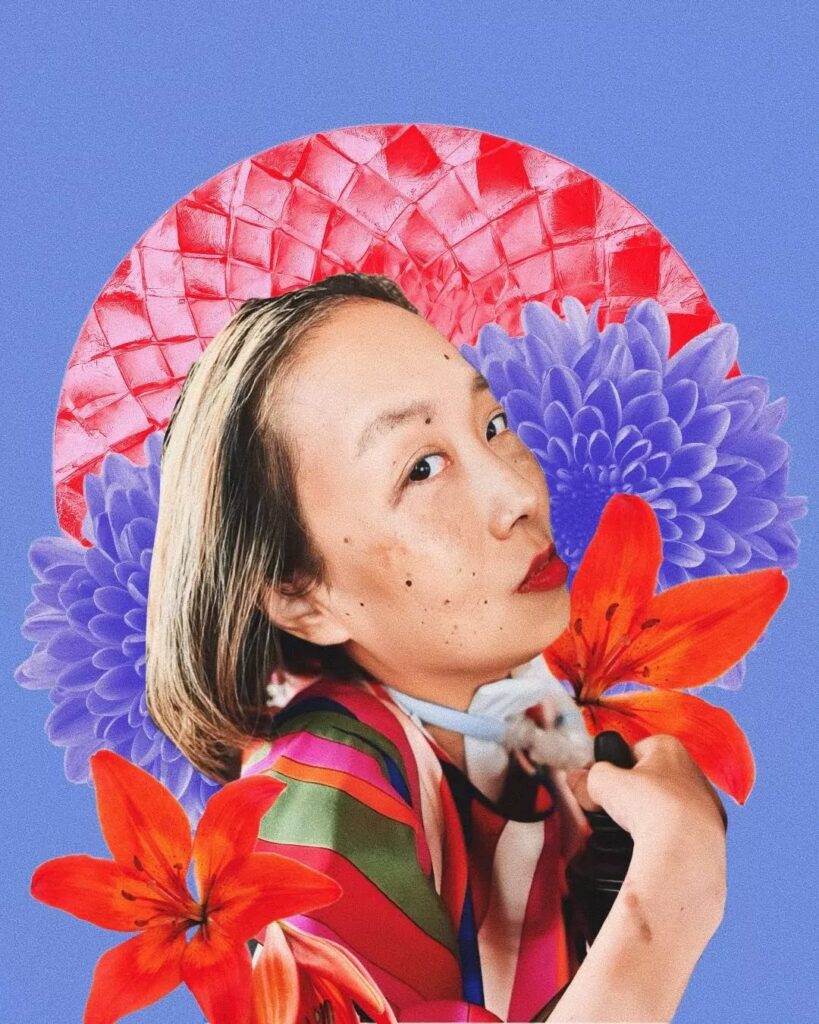
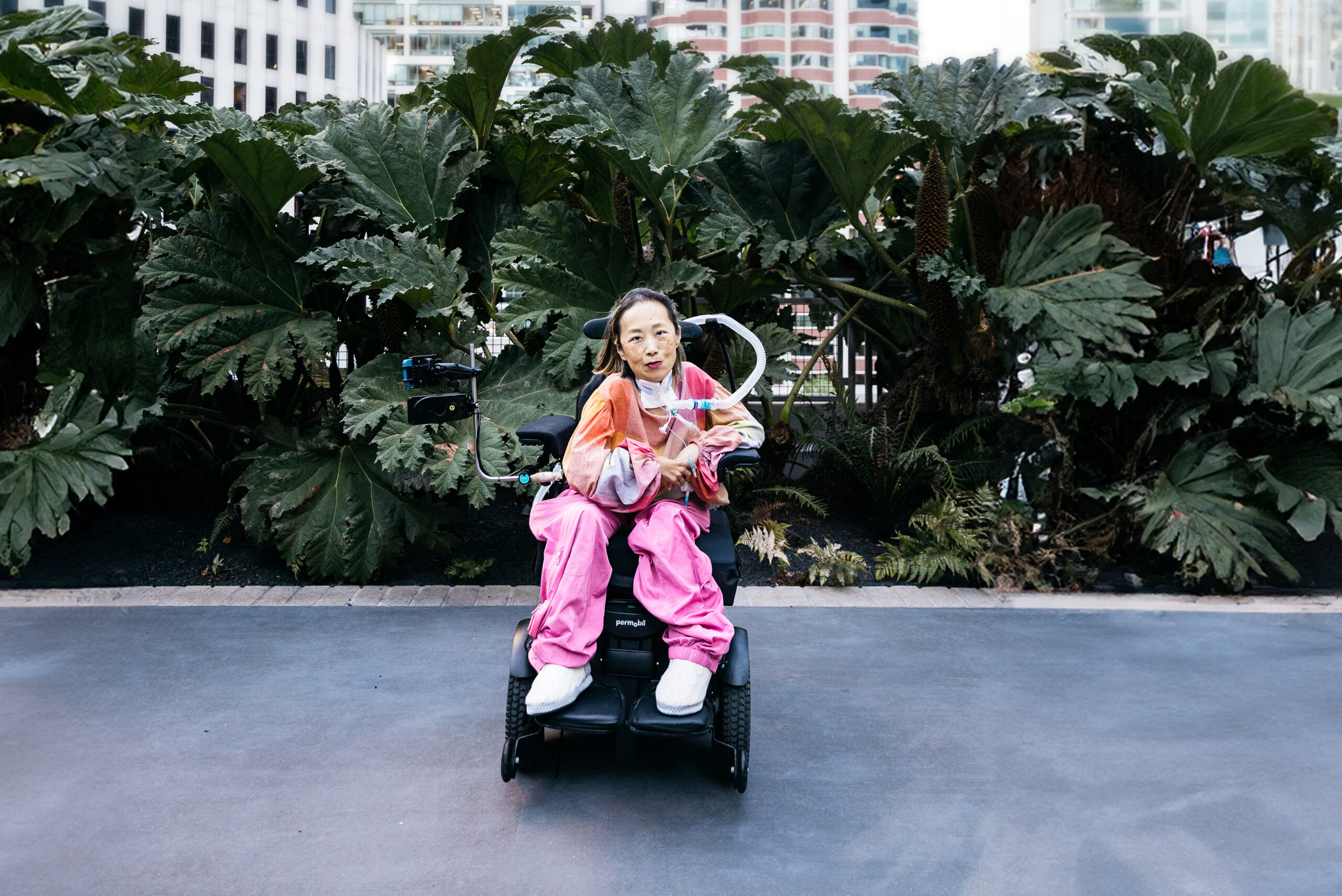
After we received the news of Alice’s transition, we invited people who loved, knew or worked with her to offer memories in the format that worked best for them. Some were interviews with DJA staffers. Others were written responses to questions. Some were sent as voice notes. The remembrances, which are published in three parts, were curated by contributing editor Sonali Gupta. Jennifer White-Johnson provided illustrations. Read the first installment here.
A virtual celebration of life for the Disability Visibility Project founder is scheduled for March 25, from 11 a.m. to 1 p.m. Pacific Time. Watch the livestream at the San Francisco Disability Cultural Center’s YouTube channel.
Rabbi Elliot Kukla
Alice had a remarkable capacity for living fully while also accepting grief and death as her “shadow partner.” Being with Alice was always a celebration, complete with delicious treats, red lipstick, and selfies. She knew that our lives are rich and full as disabled people not despite grief, but in part because in a world that blatantly disregards our lives and often cuts them short, we treasure each other in beautiful ways and find creative ways to care for each other.
Because Alice had a progressive neuromuscular illness, she was constantly losing function and we often spoke about how this led to both grief and remarkable skills for adaptation. One of my most precious memories of her was her 50th birthday party right after she lost the ability to eat by mouth, taste and smell. She fed us all a glorious feast including Peking duck, garlicky greens and miso cod. She delighted in this meal that didn’t end up in her own belly, as was her way. At one point, she put a tender morsel of cod to her lips and danced a happy food jig in her wheelchair.
In an email shortly before her death Alice wrote to me saying: “Having the audacity of imagining a world centered on disability as a miraculous thing of beauty and power gives us the space to reconsider our orientation with ourselves and others. This is why I always loved speculative fiction. There are no limits to imagination and this can lead us to building a world that we truly deserve centered on access, justice, and liberation.”
Alice was loving, joyful, creative
Alice could imagine worlds that don’t exist yet. This was one of her spiritual gifts that inspires me. She believed in us and believed that we could create something better. She was an oracle. This meant not just visioning the future, but creating it.
Alice changed the world by telling stories. Her legacy is a vast archive of disabled stories that never existed before in her books, website, and podcast. Disabled people have been dehumanized and seen as objects of pity or inspiration as opposed to people. Alice knew that specifics matter and stories are immortal. She made sure our highly individual quirks, humor, and joy would be remembered by history.
Alice truly wants her celebration of life to be a party. She was an incredible hostess and her celebration of life is an extension of her desire to welcome and bring pleasure to a huge circle of people she loved.
Andrew Pulrang
Alice brought to disability culture and politics a balance of fervor and compassion that felt rare and precious.
The most obvious difference with #CripTheVote is that it happened almost entirely through social media, specifically Twitter.
Another difference is that we ran it mostly as a limited, personal project among the three of us. We didn’t try to turn it into a permanent organization.
We invited many people to participate but didn’t attempt to build a self-perpetuating institution. That small scope helped avoid many of the conflicts that often plague activist organizations.
Very roughly speaking, Alice pursued more culturally connected topics, while I focused more on voting and legislative processes. Gregg helped bridge those areas.
We divided tasks informally—writing questions, producing graphics, inviting participants, and maintaining social media accounts.
I realized we had made an impact when presidential candidates began producing detailed disability policy platforms.
Working with Alice taught me the importance of community-driven leadership, including conversations and cultural work that I might not have gravitated toward myself.
Her example also made me more aware of my own privilege as a financially secure white man within disability communities.
Alice also helped me understand why many disabled people are not as invested in voting or formal political advocacy as professional activists might expect.
What feels most radical in retrospect is how small and low-cost the project was compared to its impact. It demonstrated how digital organizing could create meaningful political change.
Rebecca Cokely
Alice and I were super sci-fi nerds together. She teased me for not watching the end of Fringe because I didn’t want to see what happened to Peter. We called each other Sestra because of our love of Orphan Black. My favorite thing I ever got to do for her was to order a cameo by John de Lancie, who was “Q” in Star Trek, for her birthday. He shared how he had googled her and was excited to pick up “Year of the Tiger.” I’ve watched the video a number of times since she passed and it doesn’t fail to make me laugh.
Alice thought about friendships and relationships in four dimensions. Her outward facing work really helped not only shape disability culture for us, but also create spaces where non-disabled people could learn. Over the years the number of people who have reached out to me on social media (authors, politicians, writers, celebrities, and total randoms) to talk about Alice’s impact. I’d like to see the structures she built continue and look forward to finding ways to be supportive of that work.
Alice in many ways was our community’s first public intellectual. It was something she and the community struggled with figuring out. People all over the world feel like they knew Alice, like she was part of their family. Sometimes people felt like they had the right to speak on her behalf or be aggressive when engaging with her in public. Witnessing this firsthand, both in public and online, has made me really think about boundary setting. Because, while being so outward facing has its positives, when it starts infringing on ones’ right to bodily autonomy, it can be really hard. I’m reminded of Audre Lorde’s quote, “If I didn’t define myself for myself, I would be crunched into other people’s fantasies for me and eaten alive.”
Alice was the Empress of the Disability Internet. She seized the opportunities presented by new technologies every time they appeared. I think we need to hold onto that. It proved to be really critical in the 2020 election given the disability community was ahead of the game in online organizing during a global pandemic.
Alice created infrastructure that previously did not exist. She built mechanisms for disabled people to engage with each other and to share our experiences, learnings, and research. In many ways, Alice served as the community’s town square—whether it be the Disability Visibility Project, #CriptheVote, E-Sims for Gaza, or her books—she built places for us to gather.
More DJA Coverage
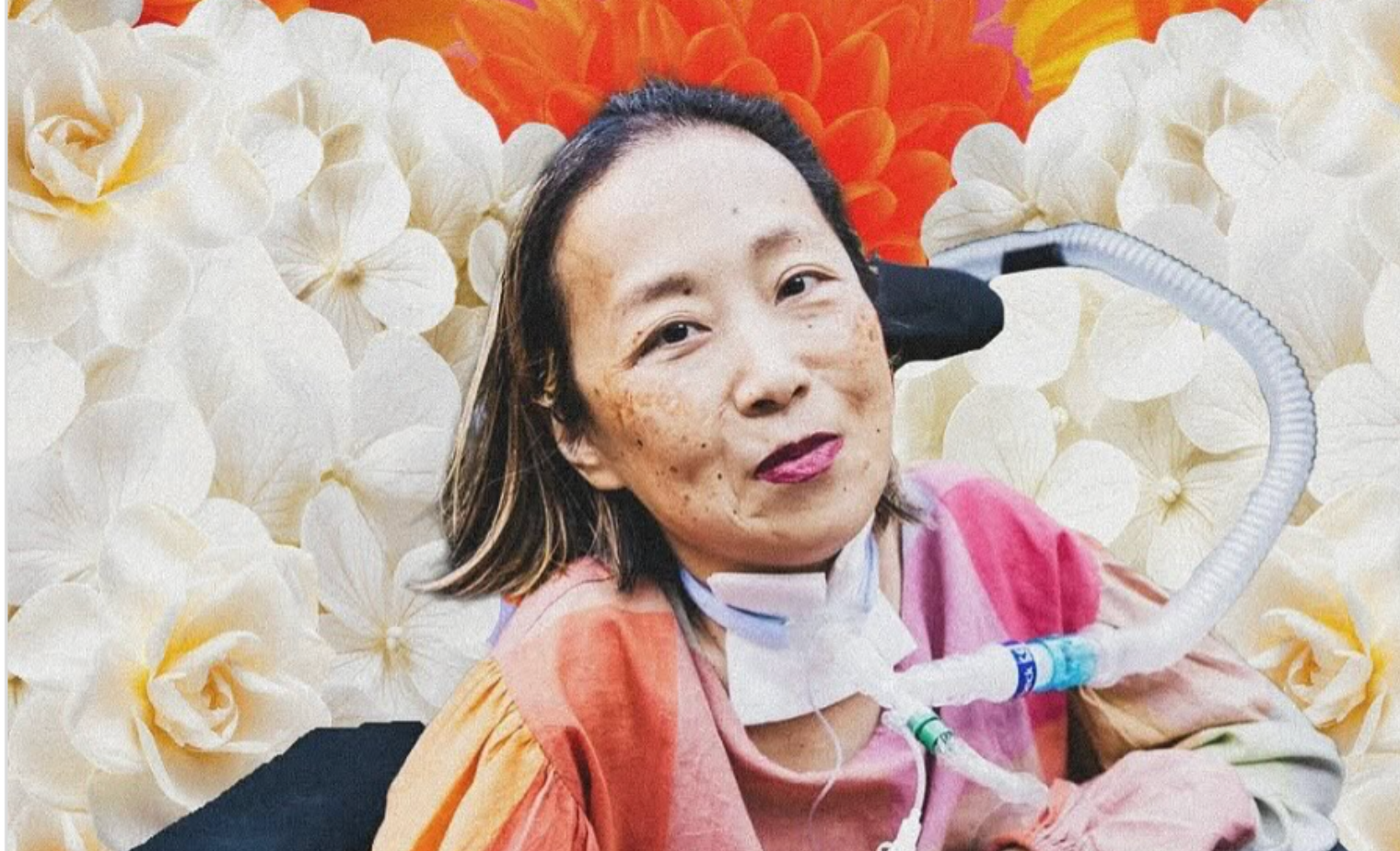
I met Alice five years ago, at the start of the hardest point in my life. My brother was...
By
March 25, 2026
After we received the news of Alice's transition, we invited people who loved, knew or worked with her to...
By
March 25, 2026

We’ve been asked repeatedly at DJA why we capitalize the word Disabled in our reporting. So, for this piece,...
By
March 23, 2026