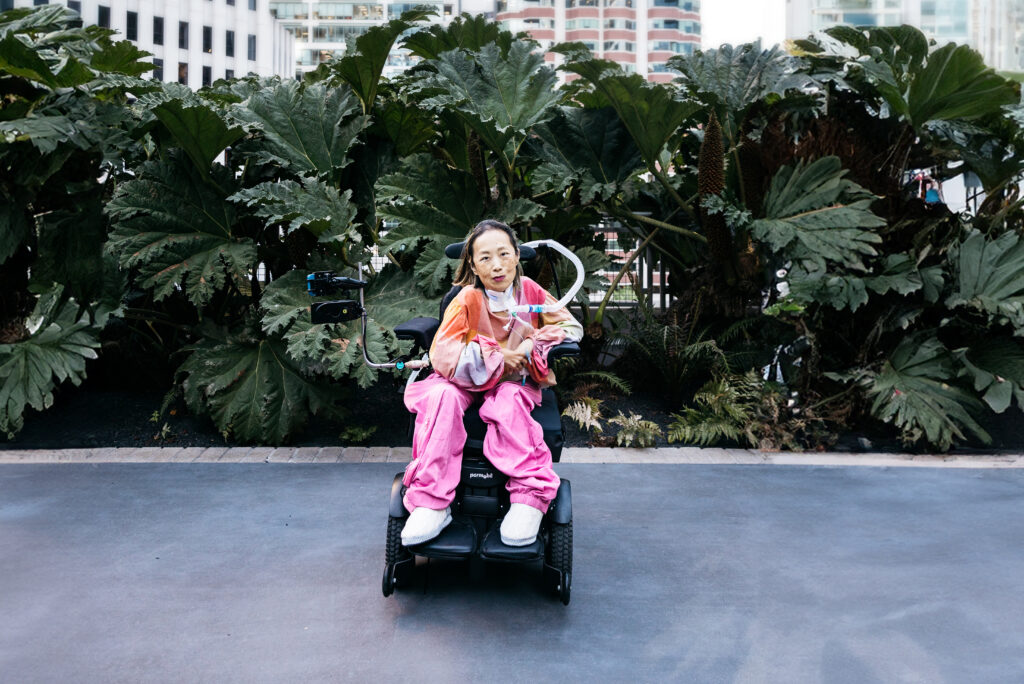
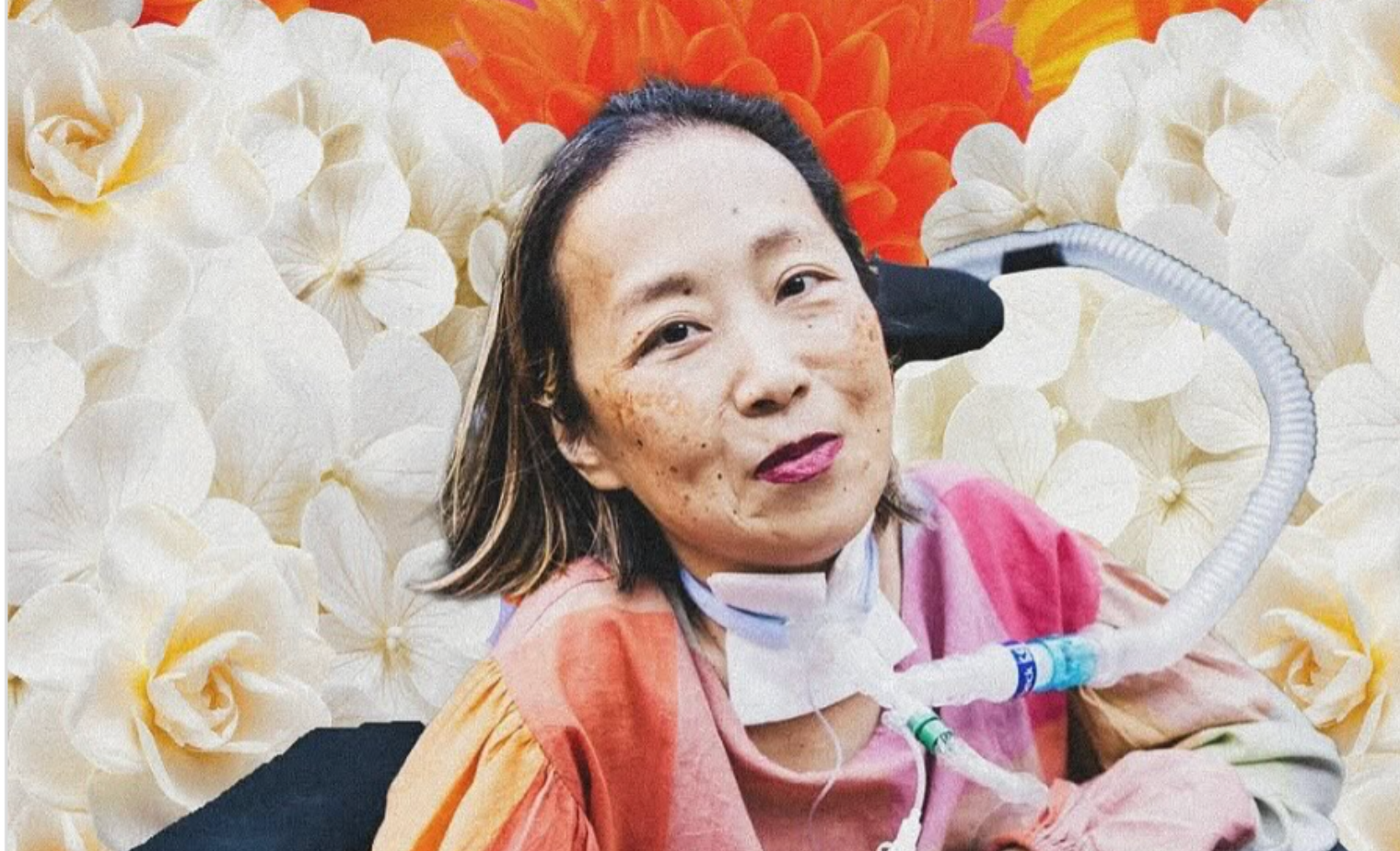
After we received the news of Alice’s transition, we invited people who loved, knew or worked with her to offer memories in the format that worked best for them. Some were interviews with DJA staffers. Others were written responses to questions. Some were sent as voice notes. The remembrances, which are published in three parts, were curated by contributing editor Sonali Gupta. Jennifer White-Johnson provided illustrations. Read the first installment here.
A virtual celebration of life for the Disability Visibility Project founder is scheduled for March 25, from 11 a.m. to 1 p.m. Pacific Time. Watch the livestream at the San Francisco Disability Cultural Center’s YouTube channel.
Leah Lakshmi Piepzna-Samarasinha
I first met Alice at an Allied Media Conference where they did a presentation about DVP and Alice Skyped in. I remember really being struck by the expansiveness of her vision. She was like, I’m going to collect all these stories, and I’m going to kind of hack StoryCorps to be able to create this disabled oral history archive. I was really impressed by it and a little shy because I really wanted her to like me.
Alice reached out to both Stacey Park Milbern and me about being on the DVP podcast. She was just lovely. Our episode was on queer, disabled femmes of color and emotional labor. She asked really good questions. She respected us. She wanted to build with us.
I never met Alice in person. But I don’t feel like I never met her. It was a friendship that really bent time and space.
She didn’t abandon herself. She was really adamant about not sacrificing herself for the community. She would want us to have pleasure and not sacrifice our own writing for other people’s, to be for ourselves as much as we are for other people.
I learned what a fucking nerd she was and how weird she was and how fucking blunt and sarcastic she was. That bitch had Chanel red lipstick and amazing fashion and an undercut and was not fucking around. She was honest and fierce.
You can come to this clearinghouse of intersectional disability culture that’s snarky and fun, talking about Star Trek and talking about sex.
She fucking broke the mold when it came to crip pleasure activism—her love of those peaches, her outfits, her dinner parties, those mooncakes, the fancy tea that she sent me, the way she would send me cute gifts that I would never buy on my own. I think she would want us to spoil each other. I think she would want us to be clear when there are political lines we have to draw where somebody’s done something that’s really fucked up, to name it, but to keep bringing more and more of us in. I think she would want that.
There are people who have radical ideas about disability that they wouldn’t have had without Alice. Disability culture is not all white men and white women. It’s Black. It’s brown. It’s intergenerational. It’s queer. It’s kinky. It’s neurodivergent. It’s Deaf. It’s physically disabled. It’s Palestinian. It’s global.
We felt that fighting for Gaza was something that made our souls stronger and made us feel better. It wasn’t a drain. It was something that built us up. It helped my health and energy to be part of that.
Activism is draining. That’s true. But our crip Asian activism gave us all so much life. It was life-sustaining. It was us choosing and speaking for and being with life.
That initiative came out of feeling such despair and such hopelessness. We felt that we couldn’t go on the big marches to D.C. We couldn’t do able-bodied political activism. We couldn’t participate. We came up with Crips, and it’s one of the things I’m proudest of.
Alice’s anti-Zionism and her staunch support for Palestinian liberation and the liberation of all oppressed people, and her anti-militarism, were whitewashed from many places, including the New York Times obituary and other mainstream disability obituaries. But the work she did with Crips, using her platform to get the word out, mattered.
One of the many things that moved me to tears was seeing Gaza Funds, which is a clearinghouse of funds that people in Gaza can access to survive. They wrote that they were reading al-Fatiha for our beloved Alice.
She did not falter in being maybe the first disabled voice with a big platform to come out against genocide and to link Palestinian liberation and disability justice and lift it up in so many ways—memes, the Palestine x disability syllabus, publishing my work and so many others.
She showed me, and I think a lot of people, that you can actually have a wider reach and go into some mainstream media places and hack them to get your work out there. You don’t have to water down your voice or your politics. I think we made each other braver. I don’t want to put words in her mouth, but we supported each other in becoming more radical.
It was a real honor to experience her time on Earth. It was a real honor just to watch her. I counted my lucky stars that she was my friend. She was my comrade. She was a chosen older sister in some ways. I don’t know if she would have named herself that, but I really felt that familial connection. I’m really glad that I spent the last couple years telling her I loved her every chance I got.
She really epitomizes how sharing stories and sharing ideas and arguments and creating a big tent for disabled culture can change things and be a lifeline. We need that to continue.
Gregg Beratan
Alice always made sure people saw the breadth and complexity of disability culture and politics.
She understood how simplistic narratives and stereotypes had harmed our community and limited our collective power.
You can’t overstate the importance of the Disability Visibility Project. Alice created a space where you could see the depth, beauty, and even the conflicts within the disability community.
She never tried to hide our community’s flaws to present a perfect image. She believed showing the full picture created space for everyone.
Both of us came to our work with sociological backgrounds. Over time she reminded me of the importance of connecting personal stories to policy debates.
People can dismiss abstract policy discussions more easily than lived experience.
The disability community took ownership of #CripTheVote from the beginning. Alice, Andrew, and I organized chats and events, but the community tweeting around the clock made it powerful.
We weren’t backed by a large organization or trying to monetize the project.
We grounded the work in disability justice, recognizing that rights alone don’t address the full lived experience of disability and ableism.
We made most decisions by consensus and had a relationship based on mutual respect.
Disabled people exist in every community, and that insight shaped all of her work—from #CripTheVote to the Disability Visibility Project to eSims for Gaza.
Although we never met in person, it was one of the most enjoyable partnerships of my life.
We began to see the impact during the 2016 election cycle. By 2020 the shift was clear when presidential candidates released detailed disability policy agendas and even joined conversations on the hashtag.
At that point it was obvious that the disability community had created a political space that candidates had to engage.
Alice always believed in the power of the disability community. Her work consistently focused on bringing disabled people together and helping us recognize our collective strength.
She believed the people who change things for disabled people are disabled people themselves.
The most radical thing about #CripTheVote was that it truly belonged to the community.
It succeeded because of a perfect storm: a critical mass of disabled people online, a relatively safe platform at the time, a media environment paying attention to social media, and a series of high-stakes election cycles.
More DJA Coverage
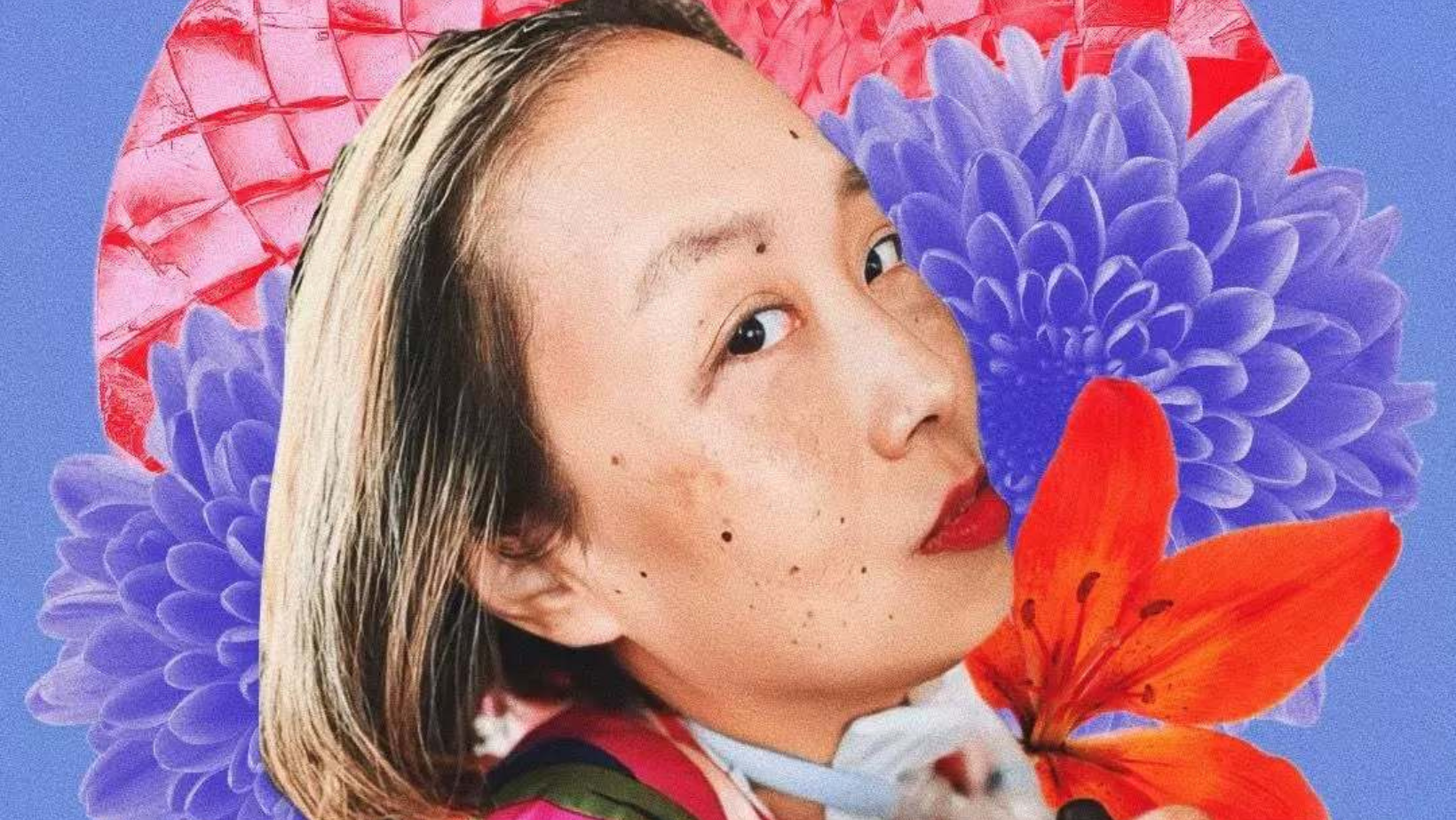
After we received the news of Alice's transition, we invited people who loved, knew or worked with her to...
By
March 25, 2026
I met Alice five years ago, at the start of the hardest point in my life. My brother was...
By
March 25, 2026

We’ve been asked repeatedly at DJA why we capitalize the word Disabled in our reporting. So, for this piece,...
By
March 23, 2026