Despite a wave of media coverage suggesting that action from the Trump administration means the loss of a decades-long constitutional prohibition against segregating people with disabilities, disability-justice advocates want people to understand Olmstead is still the law.
Last week, almost as if to sneak it in before the weekend, the U.S. Department of Justice quietly issued a memo arguing that states are not legally required to provide in-home or community-based care to people with disabilities.
That argument is a 180-degree-reversal of long settled law, upheld in the landmark Supreme Court ruling L.C. v. Olmstead, that prohibits states from warehousing people with disabilities in hospitals and other institutions. Doing so violates the Americans with Disabilities Act and, thus, the Constitution. The DOJ memo calls into question whether federal law requires that states move people out of institutions into home- and community environments with necessary supports.
“That memo does not change the Supreme Court’s decision. It does not erase disability rights laws. It does not automatically eliminate services. But it does signal a potential shift in how federal agencies may choose to interpret and enforce those protections moving forward. As an advocate, this is a reminder that rights on paper only matter when people are willing to defend them,” Miami-based nonprofit Your Education Advocates wrote on Facebook.
According to the RespectABILITY Law Center, “advocates warn that this move attempts to undo decades of civil rights protections and essentially gives the government a green light to push disabled and mentally ill individuals into segregated, institutional facilities.”
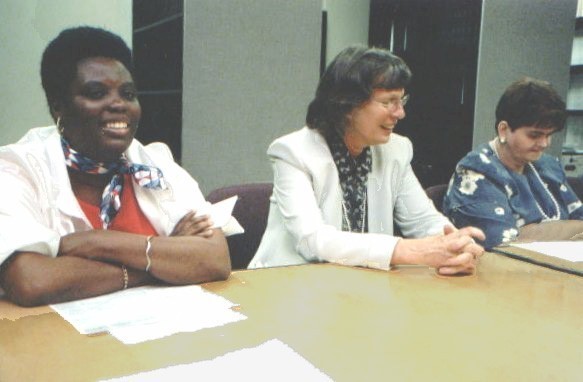
In the late 90s, two Georgia women who had spent most of their laws at a regional mental health facility in Atlanta, sued the state for violation the ADA over the conditions of their confinement. Since the Olmstead decision was handed down, Republican and Democratic presidential administrations have pursued dozens of statewide investigations, negotiated settlement agreements, amicus briefs in private and public lawsuits and consent decrees under.
As of 2019, the U.S. Department of Justice was involved in enforcing 10 Olmstead settlements and was actively suing in Texas and Mississippi at the time. In Mississippi—which has the highest second highest share of Disabled people in the country and is one of the poorest states in the nation—a federal judge ruled that the state had violated federal law. However, Mississippi successfully appealed to the U.S. 5th Circuit Court of Appeals, which also takes cases from Louisiana and Texas and is widely considered the most conservative federal appeals circuit. The Biden Justice Department declined to appeal to the U.S. Supreme Court, where the conservative majority might have severely gutted constitutional protections for Disabled people.
That hesitation was likely justified. Since retaking control of the White House, the Trump administration has made a number of decisions that undermine gains in disability rights, including the appointment of Robert F. Kennedy Jr. to lead the U.S. Department of Health and Human Services. Kennedy’s radical restructuring of public-health policy has sparked deep concern among Disabled Americans, their families, and the community at large.
The Trump administration has also sought to cut the number of lawyers defending the rights of Disabled people through state agencies and the Justice Department. In December, Trump proposed slashing the system’s funding from $148 million to $69 million for fiscal year 2026, Kaiser Health News reported.
“This has been such a bipartisan issue for 30 years and in the last few years, anytime there has been a challenge to our funding, we’ve gotten a lot of support from our state representatives and our Congress people,” said Jane Carroll, communications director for Disability Rights Mississippi.
Writing for the American Association of People with Disabilities, Jess Davidson called the DOJ “incorrect” in its assumptions about Olmstead.
“But the fact that their conclusion is unjustified and incorrect doesn’t change the fact that they will seek to use said interpretation to hurt disabled people, lock us away, end our autonomy over our lives, and in many cases, end our lives altogether,” Davidson wrote.
Advocates urge citizens to contact their members of Congress to express concerns over the DOJ memo. In the meantime, All Things Disability Equity has a resource guide to help you get up to speed on all things Olmstead.
Image: From left: Lois Curtis, a legal-aid attorney and Elaine Wilson (Courtesy Administration for Community Living)
More DJA Coverage
The Minnesota Department of Human Services is planning to replace Housing Stabilization Services, a Medicaid program that was so...
By
October 12, 2026
A bipartisan committee in the U.S. House of Representatives is affirming the rights of Disabled people to live in...
By
September 30, 2026

Fear not — Section 504 is still the law. That's the message disability rights attorneys and advocates are stressing...
By
September 25, 2026