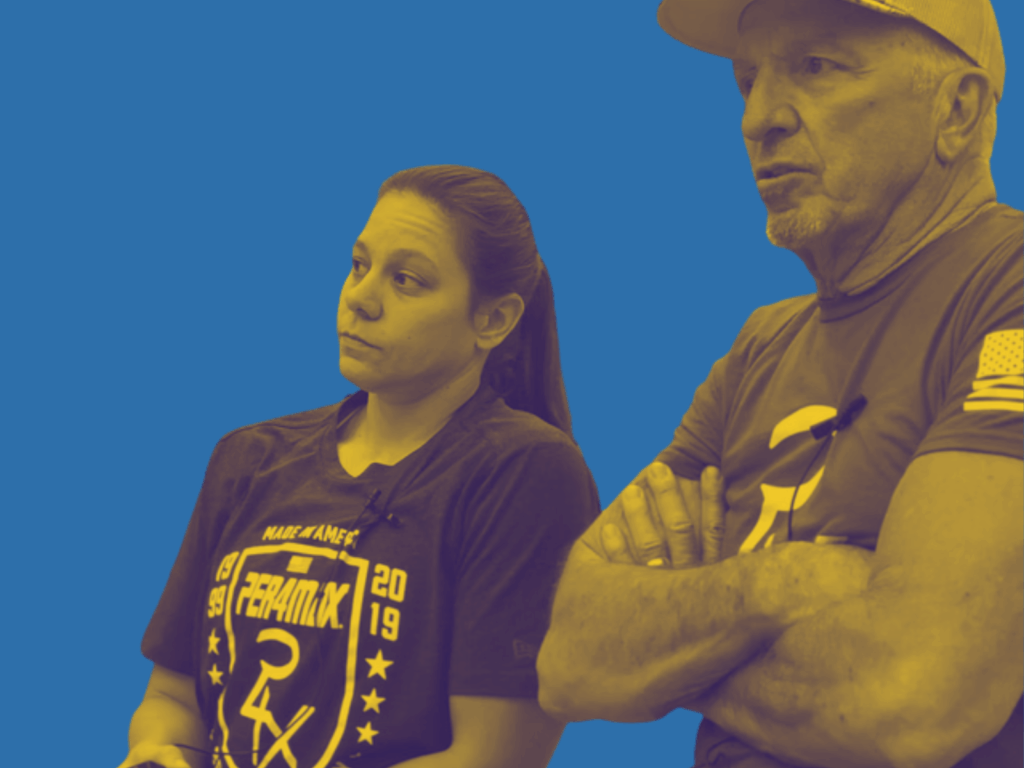
Dave Kiley isn’t particularly interested in being your inspiration. How do I know? I’ve read his book.
Kiley and Miles Thompson’s Wheel Head: The Wheel Print of David Kiley is the exact opposite of the typical inspirational story, and avoids the standard trajectory of para sport memoirs. In fact, it takes those tropes and wheels back and forth over their proverbial toes.
Kiley confronts his addiction, faith, a 50-year-plus career in para sport, a sporting world in flux, and introduces dozens of people who have been foundational in the para sport movement and deserve more recognition.
Kiley says it was important to highlight disability history in a world where it is rarely taught.
“I tried to add history to most of what I was talking to because if there’s anything lacking in adaptive sport, it’s history… you’re looking down at your wheelchair and you’re going, ‘This is a pretty cool ride. Where did it all come from?’ You know, it came from those days, in a garage and someone thinking outside the box and making it happen,” he said.
In many ways Kiley’s career and this book traces the history of para sport — the good and the bad. For every section highlighting the professionalization of a sport once considered purely recreational there is a reflection on how addiction and sobriety have shaped his life. Kiley told DJA that part of the reason he wanted to stay away from focusing on inspiration is to actively help others facing the sorts of barriers that are unspoken but are still there for many Disabled athletes today.
“I wanted to be real. I think there’s plenty of inspirational stuff that just tells that sunshine story of comeback or overcoming… It was [written] with the notion that I might help another struggling alcoholic or addict. I was really open and left myself out there, but I thought that would also mean a lot to people that I had the confidence to be really honest,” he said.
His co-author, Thompson, a former journalist and fellow long-time para athlete and coach, is a frequent collaborator on and off the court.
Thompson, who also grew up in the same California town as Kiley, said the pair also leaned away from the inspirational narrative because it doesn’t serve the book in the long term.
“We wanted to separate ourselves from that model,” Thompson said. “Those types of books, the shelf life on them is pretty short. You’re going [to] read it and pass it on. We wanted to create a book that stays on the shelf, that [you] can use as a reference point.”
Wheel Print provides plenty of those reference points. Kiley is perhaps best known for his time in wheelchair basketball. He currently serves as the head of the National Wheelchair Basketball Association Hall of Fame and is a member of the U.S. Olympic and Paralympic Committee Hall of Fame. However, he also won medals in track and field and alpine skiing alongside a successful tennis career. That, too, is a lesser told part of para sport history: how many athletes competed in both summer and winter sports earlier in the movement.
Thompson says that the beginning of their co-writing process included Kiley sharing a draft outline and Thompson refining it. That shifted as the process went along, though Thompson also says he had to push to get to the deeper stuff that he thought would resonate with readers.
“I was the guy saying, ‘Come on, man, you got, you got more than that’ … And you know what? To his credit every time he did.”
One area where Kiley dives deep is a 1992 Paralympics doping scandal, when the Americans had to give up their gold medals after Kiley and another teammate tested positive for a substance that was later removed from the banned list.
And that’s where Thompson’s journalistic experience came into play, sorting through documents that Kiley would send him in the mail.
“It was really easy to be factual because it was all right there. He saved everything…It really felt like I was back to when I was working as a journalist, because it was very much a journalistic sort of approach and skill set, instead of like writing prose.”
Being that blunt, especially about his own personal life, was a choice Kiley’s glad he made, even if he had some reservations.
“A little concern, you know, because I have parents and kids that I’ve been coaching forever, but truly they knew my heart before I wrote it,” he said.
His advice for anyone taking on a similar project?
“My suggestion would be that you seek the balance in the process of writing or putting down your experience on paper and the computer, that you come to terms with the real you — not just gold medals and national championships.”
More DJA Coverage

I met Alice five years ago, at the start of the hardest point in my life. My brother was...
By
March 25, 2026

We’ve been asked repeatedly at DJA why we capitalize the word Disabled in our reporting. So, for this piece,...
By
March 23, 2026

In this week’s edition we have a win for the Welsh Deaf community, future health funding cuts in Idaho,...
By
March 17, 2026