This week, we have New Hampshire politicians looking to technology to support the state’s disability support system; a slur making an unwelcome comeback; a report on the financial strain caregivers face; a disabled dancer returning to her art through artificial intelligence; and a Ukrainian soccer team winning one of the sport’s governing body’s most notable awards.
A bill would explore making New Hampshire a ‘technology first’ state on disability. Here’s what that means.
William Skipworth, New Hampshire Bulletin
Accessible technology — even when it isn’t tactile — can often be touch-and-go. This story focuses on a bill making its way through the state Legislature that would set the stage for more technology-driven solutions to accessibility challenges. That could include tools such as automatic pill dispensers, which may reduce the need for in-person support in some situations.
So how do the sponsors of House Bill 1685 plan to do that? By creating a commission to explore a “technology-first framework” for state-administered services for people with disabilities. Other states, including Missouri, have taken a similar administrative approach. One university-affiliated institute at the University of Kansas has also shown particular interest in how technology can help fill service gaps.
Unsurprisingly, some advocates remain concerned that “technology-first” could become code for putting people second. Still, the state’s Council on Developmental Disabilities voiced support for the measure last month.
The bill now heads to the state Senate.
From the Story: “We in the disability community believe in exploring options and giving opportunities for people to use technology as a way to solve some of the problems that they’re facing with some of the barriers that are occurring, especially around the workforce” — Vanessa Blais, policy and planning director of the New Hampshire Council on Developmental Disabilities
Family Caregivers Provide Over $1 Trillion In Care Annually
Shaun Heasley, Disability Scoop
The “crip tax” — the additional cost of being Disabled — is real and increasingly well documented. So, too, is the financial toll of caregiving.
Conversations about the cost of caregiving can be difficult, often draining energy from spaces meant to center Disabled voices. There is also discomfort in some Disabled-led spaces when lived experiences are sidelined — including those of Disabled caregivers who carry both roles.
The report highlighted in this story comes from AARP, which estimates the value of unpaid caregiving at more than $1 trillion, based on a hypothetical hourly wage of $20.41. The analysis draws on an estimated 59 million caregivers providing 49.5 billion hours of care — exceeding Medicaid spending in 2024.
Discussions of caregiving costs, financial and otherwise, are especially sensitive. Caregiver burnout is often cited as a factor in cases of filicide, in which a caregiver kills a Disabled loved one. The AARP report explicitly names Disabled people and those with complex medical needs — a notable distinction, as many older adults, AARP’s primary constituency, do not self-identify as Disabled. That gap remains a persistent challenge in collecting accurate Disability-related data.
The R-word was taboo as a slur for people with disabilities. Now it’s being normalized again
Padraig Moran, CBC
The “r-word,” in a move few public relations professionals would advise, is making a comeback. This article tracks its resurgence and features advocates who decry the renewed visibility it has gained, particularly in right-wing political circles and online.
That said, the slur is not confined to the manosphere or conservative spaces. In Maine, Democratic Senate candidate Graham Platner — already criticized for multiple incidents, including a tattoo associated with Nazis — has faced renewed scrutiny over his on-the-record use of the word in comments to the media.
The article also interrogates a common framing: that using such language is a matter of free speech. Advocates and researchers argue that this framing helps explain why social media is saturated with commentary mocking perceived disabilities — whether confirmed or not — including jokes about Donald Trump’s difficulty navigating an airplane ramp or Joe Biden’s stutter.
From the Story: “People that use it think they can get away with it … all they’re doing is putting you down.” — Liz Etmanski, self advocate
Dancer with MND performs on stage again through digital avatar
Mark Lobel, Liv McMahon, BBC
If amyotrophic lateral sclerosis (ALS) is famous for anything, it’s notorious for stealing Disabled people’s joy. At the same time, dance has long been a fixture of Disability culture, challenging assumptions about how bodies can and should move.
Enter artificial intelligence.
This story from the U.K.’s national broadcaster follows Breanna Olson, a longtime dancer whose disability forced her off the stages she once knew. Using a specialized headset, Olson can map her imagined movements onto an AI-generated avatar, allowing her work to be performed for an audience. The project marks another point of intersection between technology and Disability-led art.
The performance was part of a project called “Waves of Will,” and Olson and her collaborators hope it will create more opportunities for Disabled dancers. There is room for critique — including whether such approaches reinforce normative expectations of movement — but the story ultimately centers the emotional impact of regaining a part of oneself once thought lost.
Ukraine Wins First UEFA Grassroots Gold for War-Born Disability Initiative
Dariia Mykhailenko, United 24
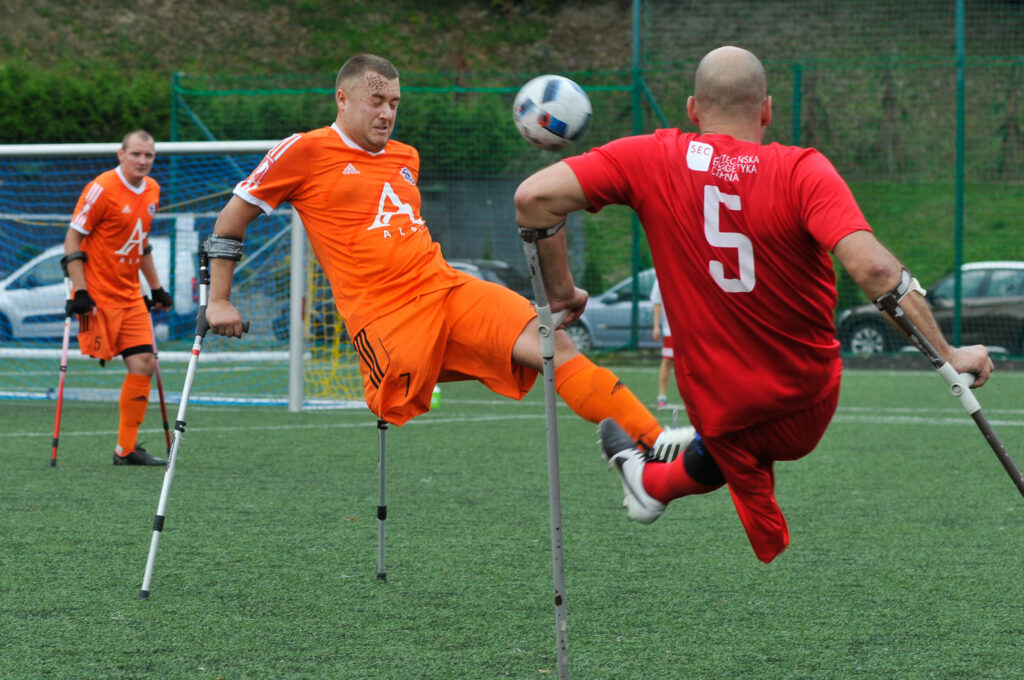
A Ukrainian soccer program has won an award no one involved set out to receive. The country earned UEFA’s Grassroots Gold Award for a program serving Disabled athletes, many of whom became Disabled while serving in the yearslong war following Russia’s invasion.
Para sport is often susceptible to “sportswashing,” in which countries use Paralympic competition to obscure human rights abuses. This program highlights the opposite: At times, para sport can illuminate global inequities in ways few other arenas can.
The program, called “League of the Mighty,” now includes 21 teams and is made up largely of war veterans who have had limbs amputated. Amputee football is a growing sport with an expanding international profile.
From the Story: “For the first time in Ukraine’s history, we are receiving a UEFA Grassroots Gold Award – and I wish the reason for this project had never existed” — Olena Balbec, Ukrainian Association of Football
More DJA Coverage
The Minnesota Department of Human Services is planning to replace Housing Stabilization Services, a Medicaid program that was so...
By
October 12, 2026
A bipartisan committee in the U.S. House of Representatives is affirming the rights of Disabled people to live in...
By
September 30, 2026

Fear not — Section 504 is still the law. That's the message disability rights attorneys and advocates are stressing...
By
September 25, 2026