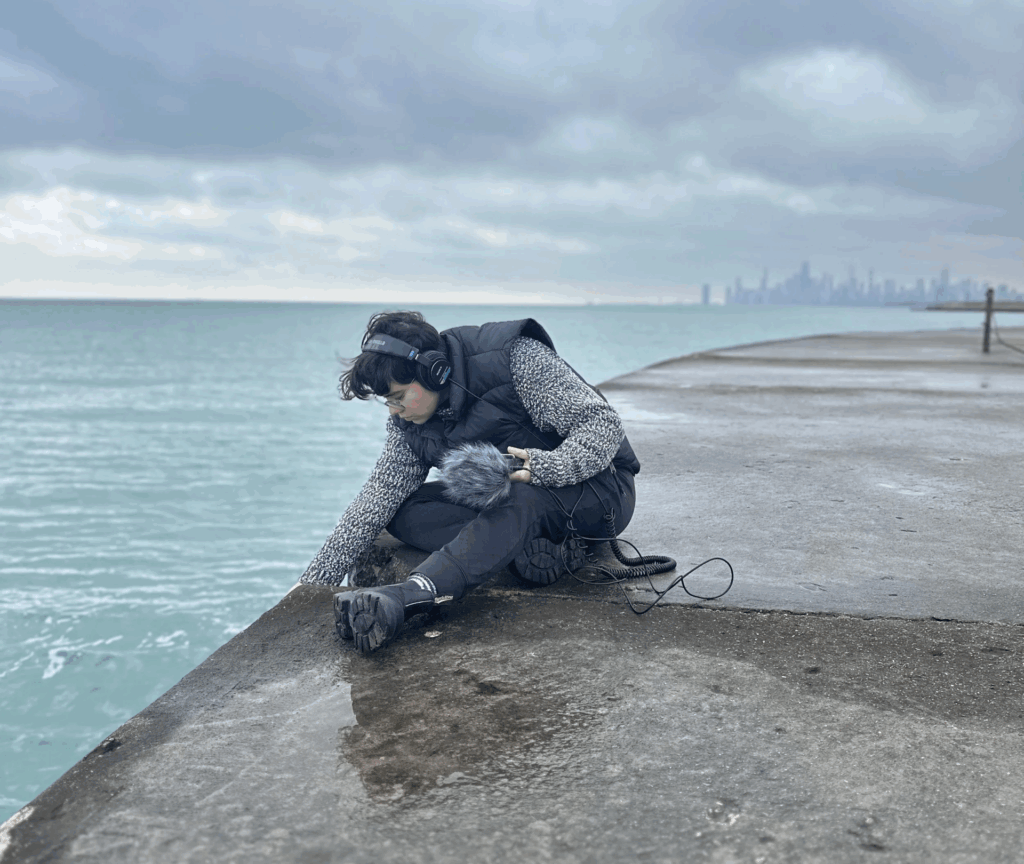
Ariana Martinez, a DJA team member, has learned that reciprocity looks different among Disabled people caring for each other (Credit:Lucy Little)
Up until very recently, I’ve been telling people that I retired from media work. In the earlier part of my career, I worked as an audio producer, sound designer, and engineer for broadcast radio, podcasts, and documentary projects. In 2021, the onset of a neurological illness brought a host of symptoms that severely impacted my ability to do screen-based work for extended periods of time. I made a hard pivot away from audio production to focus on creative work that could be done with slower, mostly analog processes.
While I’ve stabilized somewhat, illness flares still bring on migraine headaches, vision fluctuations, diminished energy, and brain fog. My work life is much more varied these days, spanning fine arts practice, illustration and graphic design for clients, project management, social media and website support, university-level teaching, and facilitating community arts and media programs. When I make radio work, I do it very slowly and with trusted collaborators who respect my access needs. The majority of my time doing paid work is spent using public-facing opportunities to support other media workers.
Twice a week, I teach in a university art and design program. Two more days a week are spent on administrative work for DJA, design or public relations work for other journalists and storytellers, and my own personal art-making. I also reserve at least one day a week to focus on health, medical, or arts administration tasks related to my creative practice, such applying for grants or artist’s residencies. I am still trying to achieve a work-life balance that works best for my bodymind, but here are some of the strategies and supports that are helpful to me right now:
Understanding the Necessity (and Inevitability!) of Rest: I have a lot of inconvenient brain things going on, and one of my conditions is a sleep disorder that was only recently diagnosed. I now understand that I must sleep when my body asks me to, and that sleep is not guaranteed to come during standard nighttime hours. I have to budget time every day, whether I am scheduled to be working or not, for one or more naps. I am not always well enough to control when I sleep. I have accepted that I will fall asleep on the job sometimes, even when I am doing my best to use the tools and strategies I have available to me for managing my energy.
Working From Home: While I love my university teaching job and I love teaching in person, it takes enormous energy for me to commute and teach. I have to account for several hours of rest and recovery after each class session. I wouldn’t give up teaching for the world, but the option to do all my other work from home is the most important accessibility support for me. I need to be in my own space so I have the privacy and safety to lie down and sleep. Working from home also allows me to set up my workspace in a way that minimizes friction between rest space (bed, couch, reading chair) and work space (computer desk, art work table) while still holding boundaries between those places.
Going Analog: Light sensitivity, pain with eye movement, and other kinds of visual stress are a big part of my daily symptom profile. My chances of having a low symptom day improve if I minimize close-range tasks done on digital screens and make use of accessibility tools that customize display size, text appearance, lighting, and other features on all my devices. My best days are when I spend no more than 3 hours on screen-based tasks; however, this is easier said than done. In order to complete work that must eventually be transmitted as some kind of digital file (text, audio, image, etc), I have tried to find ways to convert as much of my project workflow to analog tools or non-visual processes as possible. If I am working on an illustration or design project for a client, for example, I will start that work as a cut paper collage or a large, hand-drawn mind-map. If I am working on a piece of writing, I might begin that work by journaling by hand or dictating my thoughts into a voice memo app to be transcribed later.
While it might sometimes be more efficient for me to use a screen reader (a tool I am still wrapping my head around), I enjoy the tactility of my analog tools and make use of them when I can. To keep administrative tasks organized offline, I print important information that might otherwise be contained in emails or buried in some online portal on physical paper to be stored in my planner. My planner is a whole piece of equipment that deserves its own section, so buckle up!
The Book of Everything: I am a diehard paper planner and notebook user, and have spent years finding a system that works well for my brain. I’m a visual, associative, and non-linear thinker. I like to touch things and move things around. I have found that systems that allow me to add, subtract, and reposition pages work well for me. Rather than keeping many separate, bound books; a dated calendar and numbered timetable, a notebook, a sketchbook etc.; I keep a 6-ring binder with many different sections for all the areas of my work and personal life. I have sections for each of my different jobs and each of their distinct projects, sections for medical records and symptom tracking, monthly calendars, weekly schedules, daily agendas, images and ephemera that relate to various art projects, addresses and phone numbers, miscellaneous receipts, and other small items that might get lost if they are stored out of sight. I can rearrange all of these things at any point, reorganize them as my priorities change, or remove things entirely if I am feeling overwhelmed and need to simplify the tasks in front of me. My planner is my Big Book of Everything and my greatest tool to harness my own creativity and chaos for good.
Community Care: Three years ago, I wrote an article for Transom (an outlet for writing about the process of audio storytelling) called “Making Time.” The piece addresses the challenge of how to make slow, thoughtful audio work, work that stops us in our tracks when we hear it. The kinds of artful, meandering audio works I talk about in this article don’t emerge through individual technical proficiency or efficiently optimized workflows but through supporting each other through the labor-intensive work such projects demand. “Making Time” was a call for community care as the basis for the work we do and makes specific recommendations about how to offer and ask for time and support for creative work. I wrote the article when I was just crawling out of a period of severe illness, not knowing or accepting yet that my body would continue to surprise me or that my needs for support would actually deepen and multiply.
Since writing that article, I have had to become better at asking for support and releasing into the caring embrace of my community. I have learned that reciprocity looks different among Disabled people caring for each other, that it is more nuanced and more loving than a one-to-one transactional exchange. I have learned that our ability to show up for one another at any given time is mediated by factors beyond our control, and that I can become still or go quiet when I need to without fear that my gratitude will fail to radiate outward. Time moves differently here in Disabled space; feelings have a different kind of weight and endurance. My work and my life are made possible by those who navigate this space with me.
More DJA Coverage
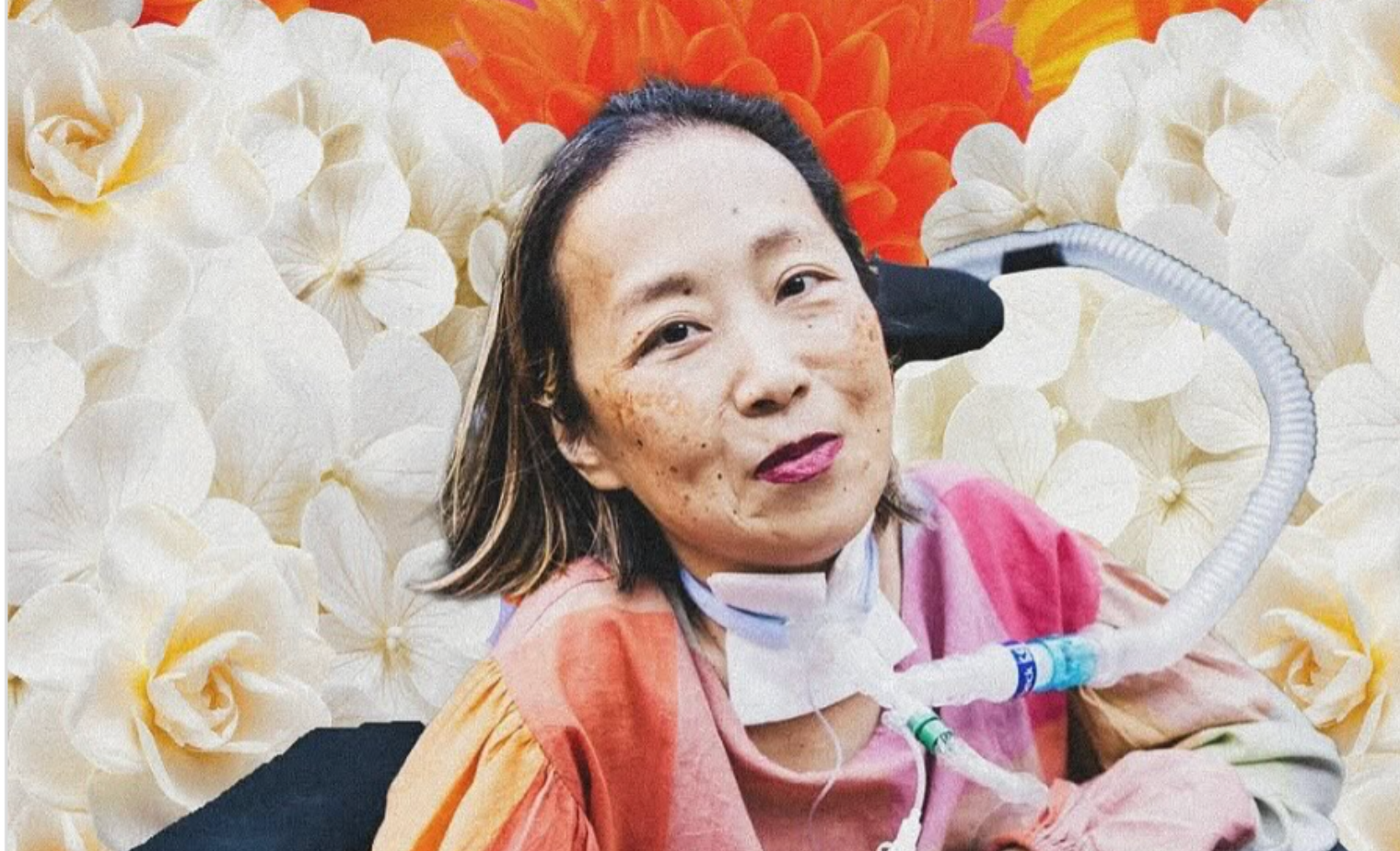
I met Alice five years ago, at the start of the hardest point in my life. My brother was...
By
March 25, 2026
We’ve been asked repeatedly at DJA why we capitalize the word Disabled in our reporting. So, for this piece,...
By
March 23, 2026
In this week’s edition we have a win for the Welsh Deaf community, future health funding cuts in Idaho,...
By
March 17, 2026